Worried About a Housing Crash in Orlando? Here's What the Numbers Show in 2026
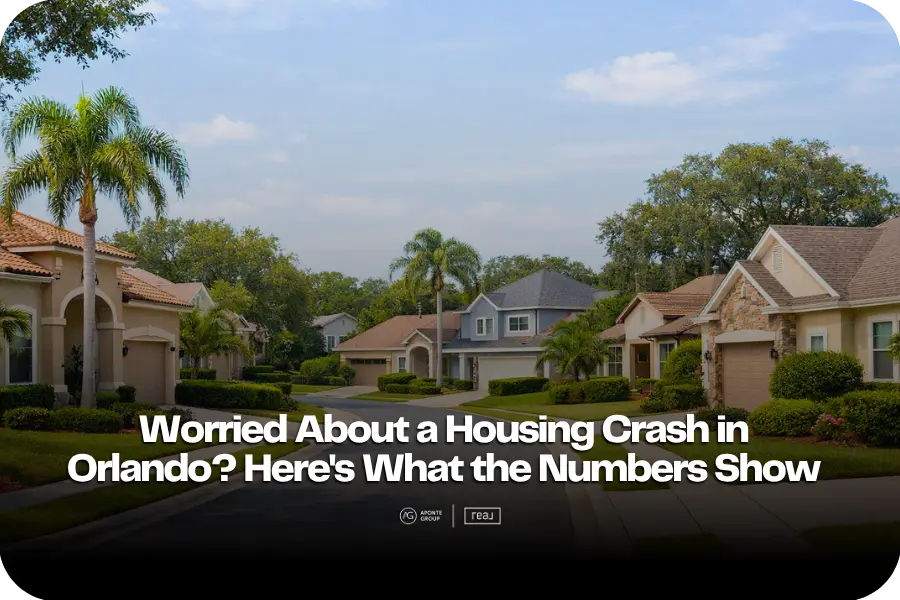
If you've been watching the news and wondering whether Orlando is headed for another housing crash, you're not alone.
There has been plenty of uncertainty in 2026. Mortgage rates remain higher than buyers became accustomed to during the pandemic years, affordability is still a challenge, and Orlando buyers have more homes to choose from than they did during the most competitive years of the market.
That can make it easy to assume another major correction is coming.
But a market that feels slower or more balanced is not necessarily a market that is about to crash.
The Orlando housing market has changed significantly from the conditions that fueled the last major housing downturn. Buyers and sellers have had time to adjust to today's interest rates, inventory has changed, and home prices are no longer climbing at the extraordinary pace seen earlier in the decade.
That does not mean prices can never decline or that every Orlando home will hold its value.
It means the numbers deserve a closer look before making a major financial decision based on fear.
A Slower Market Isn't the Same as a Crash
The word "crash" gets used pretty loosely when people talk about real estate.
A normal market correction can involve slower sales, more inventory, price reductions, and sellers accepting offers below their original asking price.
A housing crash is something much more severe.
The 2008 housing crisis involved a combination of excessive lending, widespread mortgage defaults, distressed properties, and a significant oversupply of homes. Today's market has a very different set of circumstances.
That distinction matters for Orlando homeowners.
If you see a home sitting on the market longer than it would have a few years ago, that does not automatically mean prices are about to collapse.
It may simply mean buyers have more negotiating power and sellers have to compete for attention.
Orlando Home Prices Have Entered a More Balanced Phase
The rapid price increases of the pandemic-era housing market were difficult to sustain.
Today, buyers are dealing with higher borrowing costs and are paying much closer attention to the total monthly cost of owning a home. That has naturally taken some of the urgency out of the market.
For sellers, that can feel like a dramatic change.
But a slower pace of appreciation is very different from a widespread collapse in home values.
Orlando is also not one single housing market. A well-maintained home in a desirable neighborhood can behave very differently from an overpriced property that needs significant work.
Price range matters. Location matters. Condition matters. Property type matters.
That's why a national prediction about home prices cannot tell you exactly what your Orlando home will be worth.
More Inventory Gives Orlando Buyers More Options
One of the biggest changes buyers have experienced is having more homes to compare.
During the most competitive years of the pandemic market, limited inventory created situations where buyers were competing against multiple offers and making decisions quickly.
Today's buyers generally have more time to evaluate their choices.
That is not necessarily a sign of a collapsing market.
For a buyer, more inventory can actually make the process healthier. You can compare neighborhoods, features, prices, and monthly costs instead of feeling like you have to make an offer on the first home you find.
For sellers, however, more inventory means your home has to compete.
A property that is overpriced or poorly presented can sit while a similar home with better pricing and stronger marketing attracts the buyer.
Mortgage Rates Are Higher, But Buyers Have Adjusted
Mortgage rates are one of the biggest reasons today's housing market feels different from the market buyers experienced several years ago.
But rates have also been elevated for long enough that buyers and sellers have had time to adjust their expectations.
That does not make today's rates inexpensive.
It does mean that a buyer who is purchasing in 2026 is making a decision based on today's payment environment rather than comparing every purchase to the unusually low rates available during the pandemic.
Buyers are also finding different ways to make the numbers work.
Some are putting more money down. Others are considering different price points, negotiating seller concessions, or exploring options such as temporary or permanent rate buydowns when available.
And many homeowners who already own property have substantial equity, which can make their next move financially different from that of a first-time buyer.
Orlando Still Has Buyers Who Need to Move
Real estate demand does not disappear simply because conditions become more balanced.
People still need to move.
Jobs change. Families grow. People downsize. Retirees relocate. Homeowners move closer to family. People move to Orlando from other states. Investors evaluate opportunities.
Those buyers may be more deliberate than they were a few years ago, but they are still part of the market.
That is why well-priced homes can continue to attract attention even when other properties are sitting.
For sellers, this makes understanding your specific buyer pool more important than ever.
What Would Actually Be a Warning Sign?
If you're concerned about an Orlando housing crash, don't focus on one headline or one month of data.
Watch several indicators together.
Some of the things worth monitoring include:
- Significant increases in distressed or foreclosure sales
- A large and sustained oversupply of homes
- Rapid, widespread declines in home prices
- Major increases in mortgage delinquencies
- Sharp deterioration in local employment
- A substantial drop in qualified buyer demand
- Large numbers of homeowners being forced to sell
No single metric can predict a housing crash.
The more useful approach is to look for several warning signs appearing together over an extended period.
That's also why local data matters. Conditions in Orlando can differ from the national market, and even neighborhoods within the Orlando area can experience very different levels of demand.
Questions Orlando Buyers and Sellers Are Asking
Is Orlando's housing market going to crash?
There is no reliable way to guarantee what the Orlando housing market will do in the future. Current conditions should not automatically be interpreted as a repeat of the 2008 housing crash. Buyers and sellers should evaluate local inventory, prices, demand, mortgage conditions, employment, and their specific neighborhood before making a decision.
Will Orlando home prices go down?
Home prices can rise, remain relatively stable, or decline depending on the market and individual property. Some Orlando homes may experience price reductions, particularly if they are overpriced or competing with a large number of similar listings. That does not mean every home in Orlando will decline in value.
Is now a bad time to buy a home in Orlando?
Not necessarily. Today's market may offer buyers more choices and negotiating opportunities than the highly competitive market of a few years ago. Whether buying now makes sense depends on your finances, how long you plan to own the home, your desired location, and whether the monthly payment fits your budget.
Should I sell my Orlando home before a housing crash?
Trying to time a potential housing crash is risky because no one can predict the exact timing or severity of a future market change. If you're considering selling, it is more useful to evaluate your home's current value, local competition, buyer demand, and your personal timeline before deciding whether to list.
What should I watch if I'm worried about the Orlando housing market?
Pay attention to local home prices, inventory, days on market, price reductions, pending sales, mortgage rates, and employment conditions. Looking at several indicators together provides a much better picture than relying on a single national headline or social media prediction.
Look at Your Orlando Market, Not Just the Headlines
The Orlando housing market is not frozen, and it is not automatically heading toward a crash simply because conditions are different from a few years ago.
Today's market is more balanced, buyers have more options, sellers have to compete more effectively, and higher mortgage rates have changed what people can comfortably afford.
Those are real challenges.
They can also create opportunities.
A buyer may have more room to negotiate than they did during the peak of the pandemic market. A seller who prices correctly can still reach serious buyers. And homeowners who understand what is happening in their specific neighborhood can make decisions based on actual market conditions instead of speculation.
If you're wondering what the current Orlando market means for your home or your next purchase, Aponte Group at Real Broker can help you look at the numbers that actually matter for your situation.
Thinking about buying or selling? Contact the Aponte Group at Real Broker for a local Orlando market analysis and a strategy based on your goals, price point, and neighborhood.
Categories
- All Blogs 343
- Aponte Group 100
- Around Town 197
- Communities 131
- Entertainment 66
- Events 79
- Foodie Scene 60
- Guides 174
- Home Buying 152
- Home Selling 109
- Homeowner Checklists 24
- Investing 126
- Market Updates 59
- New in Orlando 71
- Orlando 222
- Real Estate Listings 99
- Real Estate News 143
- Small Businesses 68
- Sports 22
- Tips 197
- Travel 38
- Trends 122
Recent Posts