Should You Buy a Pool Home in Florida? What Orlando Buyers Need to Know in 2026
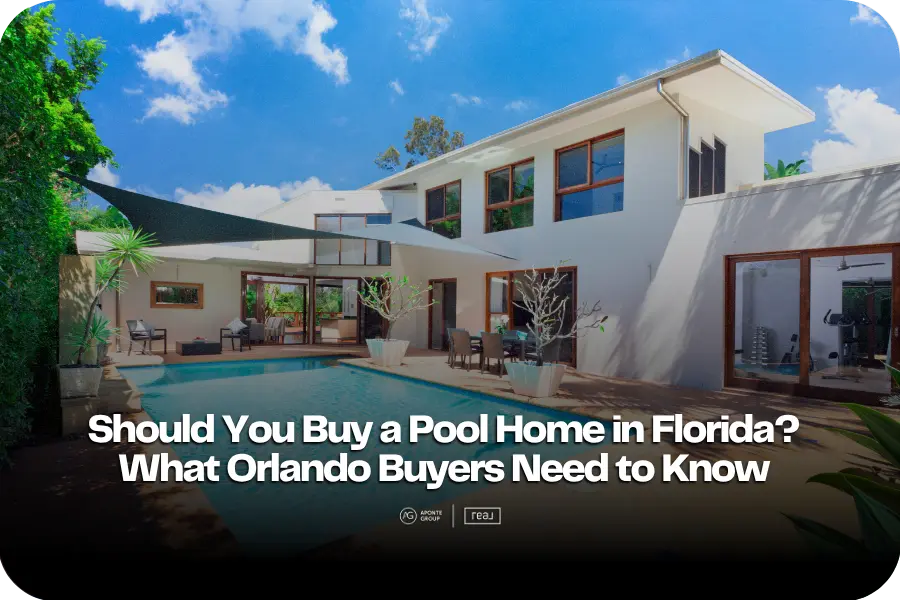
A swimming pool can be one of the best features of a Florida home. It can transform a backyard into an extension of the living space, make entertaining easier and give you a place to enjoy Central Florida's long warm-weather season.
But buying a home with a pool is not quite as simple as seeing a beautiful backyard and deciding it is a must-have.
For Orlando buyers, particularly those considering higher-end homes, the condition of the pool, age of the equipment, size of the yard, screening, drainage, heating and overall design can all affect both the cost of ownership and the home's long-term appeal.
That raises an important question: Is it smarter to buy a Florida home with a pool already installed, or purchase a home without one and build your own?
In many cases, an existing pool can make financial sense because the previous owner has already absorbed the original construction cost. But that doesn't mean every pool is an asset. A poorly maintained pool can quickly turn into a significant expense after closing.
Here is what Orlando buyers should know before making a pool part of their home search.
Is It Better to Buy a House With a Pool or Build One Later?
For many Florida buyers, purchasing a home with an existing pool can be more financially practical than adding one after closing.
A new in-ground gunite pool can easily represent a major investment. Depending on the size, finish, features, site conditions and surrounding outdoor improvements, buyers may spend approximately $80,000 to $125,000 or more on a new pool project.
The challenge is that the resale market does not necessarily give you dollar-for-dollar credit for that investment.
If you build a pool for $100,000, that does not automatically mean the home's market value increases by $100,000. The amount buyers are willing to pay depends on the neighborhood, price range, lot, pool design, quality of construction and whether pools are considered a desirable feature in that particular market.
That is one reason an existing pool can be attractive. When you buy a home where the pool is already there, the previous owner has already taken on the initial construction expense.
Of course, there is an important caveat: you are also inheriting the pool's age and condition.
What Does a Pool Really Cost to Own in Florida?
The purchase price is only one part of the equation.
Pool ownership includes regular service and chemicals, electricity, water, equipment replacement, resurfacing, repairs, cleaning and potentially heating. Over several years, those expenses can add up considerably.
For Central Florida homeowners, regular pool service and chemicals can commonly run around $100 to $150 per month, although costs vary based on the pool, service plan and provider.
Then there are the larger expenses that may occur periodically.
Pool Service and Chemicals
Approximately $100 to $150 per month for a typical Central Florida service arrangement, although actual costs vary.
Electricity
Costs vary significantly depending on pump efficiency, operating schedule, pool size and whether the pool is heated.
Variable-Speed Pump
Approximately $2,500 to $3,000 for replacement, depending on equipment and installation.
Salt Cell
Approximately $1,000 for the component, with labor potentially adding to the total.
Resurfacing
Approximately $7,000 to $15,000 depending on the pool's size, finish and scope of work.
Pool Heating
Operating costs vary based on the heating system, desired temperature, weather and frequency of use.
These numbers should be viewed as general planning ranges rather than quotes. Pool costs vary considerably from one property to another.
Why a Pool Inspection Matters When Buying a Florida Home
A pool may look perfect during a showing. The water is clear, the landscaping is fresh and the outdoor space photographs beautifully.
That does not tell you everything you need to know.
Pool equipment can be aging behind the scenes, and certain problems are not obvious during a standard home showing. A buyer should evaluate the pool as a major home system, not simply as an outdoor amenity.
Before purchasing a Florida pool home, pay attention to:
- The condition and age of the interior pool finish
- Cracking, staining or deterioration
- Tile and coping
- Deck condition and drainage
- Pool pump and filtration system
- Salt cell and salt system components
- Potential water loss or leaks
- Pool heater and heating equipment
- Automation systems and controls
- Plumbing and visible equipment connections
- Screen enclosure condition, when applicable
Multiple aging components can create a surprisingly large repair bill. A buyer who discovers that the pump, salt cell, automation system and pool surface are all nearing replacement at the same time could be looking at tens of thousands of dollars in additional expenses.
That is why a professional pool inspection can be just as important to the buying decision as understanding the home's roof, HVAC system and other major components.
Should You Buy a Saltwater or Chlorine Pool?
This is one of the more common questions buyers ask when looking at Florida pool homes.
A saltwater pool is still a chlorine pool. Instead of manually adding chlorine in the traditional way, a salt chlorine generator uses a salt cell to produce chlorine from salt in the water.
For a buyer, the bigger consideration should be the condition of the entire pool system rather than choosing a home simply because it has a salt system.
Salt systems can require replacement components, particularly the salt cell, and traditional chlorine pools have their own maintenance requirements. A pool's design, equipment age, surface condition, drainage and overall maintenance history are generally more important considerations when comparing two homes.
Should a Florida Pool Be Screened or Unscreened?
In Central Florida, the screened-versus-unscreened question is more than an aesthetic preference.
A screen enclosure can reduce insects, leaves and other debris entering the pool while also making routine cleaning easier. An open pool, on the other hand, can create a more expansive, resort-style feeling and allow for greater visual connection between the pool, landscaping and surrounding property.
The right choice often depends on the specific yard.
Take a look at the trees around the pool, particularly mature trees within approximately 20 to 30 feet. A beautiful backyard filled with mature landscaping may also mean significantly more leaves and debris falling into an unscreened pool.
Leaves and Debris
Screened: Generally reduced
Unscreened: More exposure
Insects
Screened: Generally reduced
Unscreened: More exposure
Visual Feel
Screened: More enclosed
Unscreened: More open and resort-like
Tree-Heavy Yard
Screened: Often easier to maintain
Unscreened: May require more frequent cleaning
Storm Considerations
Screened: Screen repairs may be necessary
Unscreened: No enclosure to repair
Sun Exposure
Screened: Somewhat filtered
Unscreened: More direct exposure
Neither setup is automatically better. The best option depends on the property, landscaping, buyer preferences and how the outdoor space is intended to be used.
How Often Does a Florida Pool Need Maintenance?
Pool maintenance is an ongoing part of ownership, even when everything is working properly.
In Central Florida, many homeowners use professional pool service on a weekly basis. Pumps may run for several hours a day, particularly during the warmer months, and water chemistry needs to be monitored consistently.
Beyond routine service, homeowners should also expect periodic equipment replacement and larger maintenance projects.
Pool resurfacing, for example, may eventually become necessary depending on the finish and how the pool has been maintained. A typical resurfacing project can cost thousands of dollars, with the final price depending on the size of the pool and the material selected.
This is one reason buyers should ask for maintenance records whenever they are available. Knowing when the pool was resurfaced, when the pump was replaced and whether major equipment has been serviced can provide useful insight into what expenses may be approaching.
Is Pool Heating Worth It in Florida?
Florida has a long swimming season, but that does not mean the water is always comfortable.
Pool heating can extend the number of months a homeowner comfortably uses the pool, particularly during cooler periods. Whether it is worth the expense depends largely on how often you expect to swim.
Solar pool heating can reduce operating costs but requires additional equipment and plumbing. Electric heat pumps provide more controlled heating but can increase energy consumption. Gas heating can offer fast temperature increases but comes with its own operating costs.
For buyers considering a luxury pool home, it is worth thinking about the difference between wanting a heated pool and actually using one frequently enough to justify the expense.
A heated spa is a different calculation because the smaller volume of water can generally be heated more efficiently for shorter periods when it is needed.
Which Pool Features Are Actually Worth Having?
Not every pool upgrade is equally useful.
The best features are often the ones that improve the experience every time you use the backyard rather than features that simply make the pool look impressive in listing photos.
For example, a well-designed pool area may benefit from:
- A properly sized pool deck
- Comfortable shaded areas
- Efficient variable-speed equipment
- Thoughtful outdoor storage
- Good drainage
- Convenient equipment access
- Practical lighting
- Safety features
- Outdoor entertaining space
Equipment placement also matters. Pumps, heaters and other mechanical systems can generate noise, so buyers should pay attention to where the equipment sits relative to bedrooms and outdoor living areas.
For families with children or grandchildren, pool safety should be considered from the beginning rather than treated as an afterthought.
Are Spools and Small Pools a Good Investment?
Smaller pools, often called spools or cocktail pools, can be excellent lifestyle features when they are designed appropriately for the property.
But buyers should be cautious about assuming a smaller pool will have the same resale appeal as a traditional pool.
A small pool can consume a meaningful portion of a backyard without providing the swimming space some buyers expect. At the same time, a future buyer who does not want a pool may see the feature as an additional maintenance obligation.
If you are building a smaller pool, the best reason is simple: you want to use it.
Whenever possible, preserve usable outdoor space around the pool so the backyard remains functional for future owners with different preferences.
When Is a Community Pool the Better Choice?
Not every Florida buyer needs a private pool.
For some households, a community pool provides everything they actually want without the maintenance responsibilities that come with owning one.
Privacy
Private Pool: High
Community Pool: Shared
Maintenance
Private Pool: Homeowner responsibility
Community Pool: Typically handled through the community
Equipment Repairs
Private Pool: Homeowner responsibility
Community Pool: Generally handled by the association
Access
Private Pool: Available at home
Community Pool: Subject to community access
Rules and Hours
Private Pool: Homeowner controlled
Community Pool: Community controlled
Backyard Space
Private Pool: Pool uses part of the lot
Community Pool: Entire private yard remains available
A community pool can be especially appealing when a buyer would rather use the backyard for entertaining, landscaping, pets, gardening or additional outdoor living space.
The tradeoff is that community pools come with shared use, rules, operating hours and potentially higher HOA expenses.
Who Should Consider Buying a Pool Home in Florida?
A private pool is generally a stronger fit for buyers who:
- Expect to use the pool frequently
- Enjoy outdoor entertaining
- Value privacy
- Plan to own the property for several years
- Have room in their budget for ongoing maintenance
- Are comfortable planning for future equipment replacement
- Want outdoor living to be an important part of the home
It may be less appealing for buyers who rarely swim, travel frequently, have a smaller yard, want to minimize ongoing maintenance or already have access to excellent community amenities.
The most important question is not whether a Florida home has a pool. It is whether the pool fits the way you actually live.
What Pool Features Matter Most for Resale?
There is no universal dollar amount that a pool adds to a Florida home's value.
In markets where private pools are common, such as many established Orlando luxury communities, buyers may view a pool as an expected feature rather than a special premium. In other neighborhoods, a pool may be less important to the typical buyer.
Condition matters, too.
A beautifully maintained pool with an attractive outdoor living area can strengthen a home's overall presentation. An outdated pool with aging equipment, cracked decking or poor drainage can have the opposite effect.
For that reason, buyers should think about a pool as part of the entire property rather than assigning it a standalone dollar value.
The lot, home design, neighborhood, privacy, outdoor living space and quality of the pool installation all work together.
What Should You Ask Before Buying a Florida Pool Home?
Before making an offer, buyers should consider questions such as:
- How old is the pool?
- When was it last resurfaced?
- How old are the pump and filtration equipment?
- Has the pool had any known leaks?
- When was the salt cell last replaced?
- Does the pool have a heater?
- Does the heater operate properly?
- How old is the screen enclosure?
- Is water draining properly away from the pool?
- Are there mature trees that create significant debris?
- Are maintenance records available?
- Are there known repairs or upgrades that have been deferred?
These questions can help turn a visually appealing backyard into a more informed buying decision.
Should You Buy a Pool Home in Florida in 2026?
There is no one-size-fits-all answer.
For the right buyer, a pool can be one of the most enjoyable features of a Florida home. It can expand the usable living space, make entertaining easier and create a private outdoor retreat that takes advantage of Central Florida's climate.
For another buyer, a community pool or a larger backyard without a pool may provide more value.
From a financial perspective, buying a home with a well-maintained existing pool can often be a compelling option compared with building a new one after closing. But the condition of the pool matters enormously. The last thing a buyer wants is to save money on construction only to inherit a major repair project.
For luxury buyers, the decision becomes even more property-specific. A pool should complement the architecture, lot, landscaping and overall lifestyle of the home rather than simply checking a box on a list of amenities.
Frequently Asked Questions About Pool Homes in Florida
Is it better to buy a Florida home with a pool already installed?
Often, it can be. The previous owner has already absorbed the original construction cost, which can make an existing pool financially attractive compared with building one after closing. However, buyers should have the pool and equipment professionally evaluated before making a decision.
How much does a new pool cost in Florida in 2026?
A new in-ground gunite pool can commonly cost approximately $80,000 to $125,000 or more depending on its size, design, finish, features, landscaping, site conditions and other improvements. Luxury pool projects can cost considerably more.
Does a pool increase the value of a Florida home?
A pool can contribute to a home's appeal and marketability, but buyers should not assume that the full cost of installation will be recovered at resale. Value depends on the neighborhood, property type, pool condition, lot, buyer demand and whether private pools are expected in that market.
What should I inspect before buying a pool home in Florida?
Buyers should evaluate the pool surface, tile, coping, deck, drainage, pump, filtration, salt system, heater, automation, plumbing, leaks and screen enclosure when applicable. Maintenance records can also help identify upcoming replacement costs.
How much does it cost to maintain a pool in Central Florida?
Routine pool service and chemicals can commonly cost approximately $100 to $150 per month, although the actual cost varies by pool size, service plan and equipment. Homeowners should also budget separately for electricity, heating, repairs, equipment replacement and eventual resurfacing.
Is a screened pool better than an unscreened pool in Florida?
Neither is universally better. Screen enclosures can reduce insects and debris and may make maintenance easier, while an unscreened pool can provide a more open outdoor experience. The best choice depends on the property's landscaping, surrounding trees, desired aesthetics and how the backyard will be used.
Is a private pool better than a community pool?
A private pool offers greater privacy and convenience but comes with maintenance, equipment, repair and safety responsibilities. A community pool can provide swimming and recreation without those responsibilities, although it comes with shared use, rules and potentially higher HOA expenses.
Looking for an Orlando Home With a Pool?
The right pool home is about more than finding a property with blue water in the backyard. The pool should make sense for the home's architecture, lot, neighborhood, maintenance expectations and the way you plan to live.
Whether you are searching for an Orlando luxury home with a private pool, comparing established neighborhoods or deciding whether a pool should be part of your next home purchase, Aponte Group at Real Broker can help you evaluate the property beyond the listing photos.
Categories
- All Blogs 343
- Aponte Group 100
- Around Town 197
- Communities 131
- Entertainment 66
- Events 79
- Foodie Scene 60
- Guides 174
- Home Buying 152
- Home Selling 109
- Homeowner Checklists 24
- Investing 126
- Market Updates 59
- New in Orlando 71
- Orlando 222
- Real Estate Listings 99
- Real Estate News 143
- Small Businesses 68
- Sports 22
- Tips 197
- Travel 38
- Trends 122
Recent Posts